
Loading…
Ber Masala Chatkara · 150 g jar
Straight to the ber-wala’s thela outside the gate, for a paper cone of ber in jaggery and masala, gone before the bus came. Ber Masala Chatkara is that taste, in a 150 g jar.


From Bundelkhand, with Ber
The khatta-meetha fruit from the thela outside school is now a jam, a juice, a dark chocolate and a jar of chatkara. Made in Jhansi, Bundelkhand.
Bestseller · 150 g jar
Ber Masala Chatkara is whole ber with jaggery, cumin, cardamom and amchur. The taste from outside the school gate, in a jar that rarely lasts the week.
Ber + dark chocolate · 45 g
Ber is tangy. Dark chocolate is bitter. Together they do something neither manages alone. We haven’t come across another chocolate made with ber.

Abrosaa Gifting · personal and corporate
Illustrated boxes of ber, for Diwali, weddings and the two hundred names on a client list. Corporate orders are quoted per order, with a GST invoice.

One fruit, a whole shelf. Swipe through.

Ber papad, rolled up to fit a pocket.
Ber changes as it ripens, and each stage tastes like a different fruit. Most of us met all three before we turned ten.
kaccha
Green and crisp
Khatta enough to make you squint.
pakka
Golden-red and soft
This is the meetha one.
sukha
Sun-dried and chewy
The one that keeps all year.
01The fruit
Winter afternoons. A thela outside the school gate. A paper cone of ber with salt and red chilli, and sticky fingers all the way home.


02The gap
Ber never left the fields. It left the shops. The fruit bruises easily and keeps for only a few days, so most of it never reached a city shelf. Growers were left with fruit and not enough buyers.

03The work
A ber tree needs little water and grows where most crops give up. So we plant it on dry land with farmers, buy what they harvest, and turn it into food that keeps: jam, juice, chocolate, chatkara.

Ber grows on hot, dry land where most fruit trees struggle. Like every plant, it uses vitamin C to protect its cells from strong sun, and its fruit stores a lot of it, along with minerals from the soil and the tree’s own protective compounds. Here is what’s inside, and what it does for you.
What it does in your body
In 100 g of fresh ber
61 mg20–160 mg across 40 varieties
Daily need: 80 mg (men), 65 mg (women).
India's food tables give 61 mg in 100 g of fresh ber. Two Indian studies of 40 varieties between them measured 20 to 160 mg, so the variety matters.
Sources: IFCT 2017 · Krishna & Parashar 2013 · Koley et al. 2016 · ICMR–NIN 2020 · EU Reg. 432/2012
Vitamin C
20–160 mg
Supports normal immune function and collagen formation, and helps the body absorb iron from plant foods.
The range is wide because varieties differ. At the upper half of it, 100 g of fresh ber covers an adult's day (65–80 mg).
Iron
0.8–1.8 mg
Needed to make haemoglobin, which carries oxygen in the blood.
Three to six times what blueberries carry (0.28 mg), and still a small share of the 19–29 mg an adult needs.
Calcium
23–26 mg
Needed for normal bones and teeth.
About four times blueberries (6 mg). Against a daily need of 1,000 mg, it is a contribution, not a source.
Potassium
265 mg
Supports normal muscle function and helps maintain normal blood pressure.
More than three times blueberries (77 mg) and cranberries (80 mg).
Nothing is wasted at the end, either. We grind the seed kernel into a body scrub. Ber leaf and seed have a long history in home remedies for skin and hair; that is tradition, not clinical proof, and we describe our scrub as a scrub.
Figures are for fresh fruit, per 100 g, unless stated. They vary with variety, ripeness and season, and they change when fruit is cooked or dried, so they do not describe our finished products; each pack carries its own label. This is food information, not medical advice.
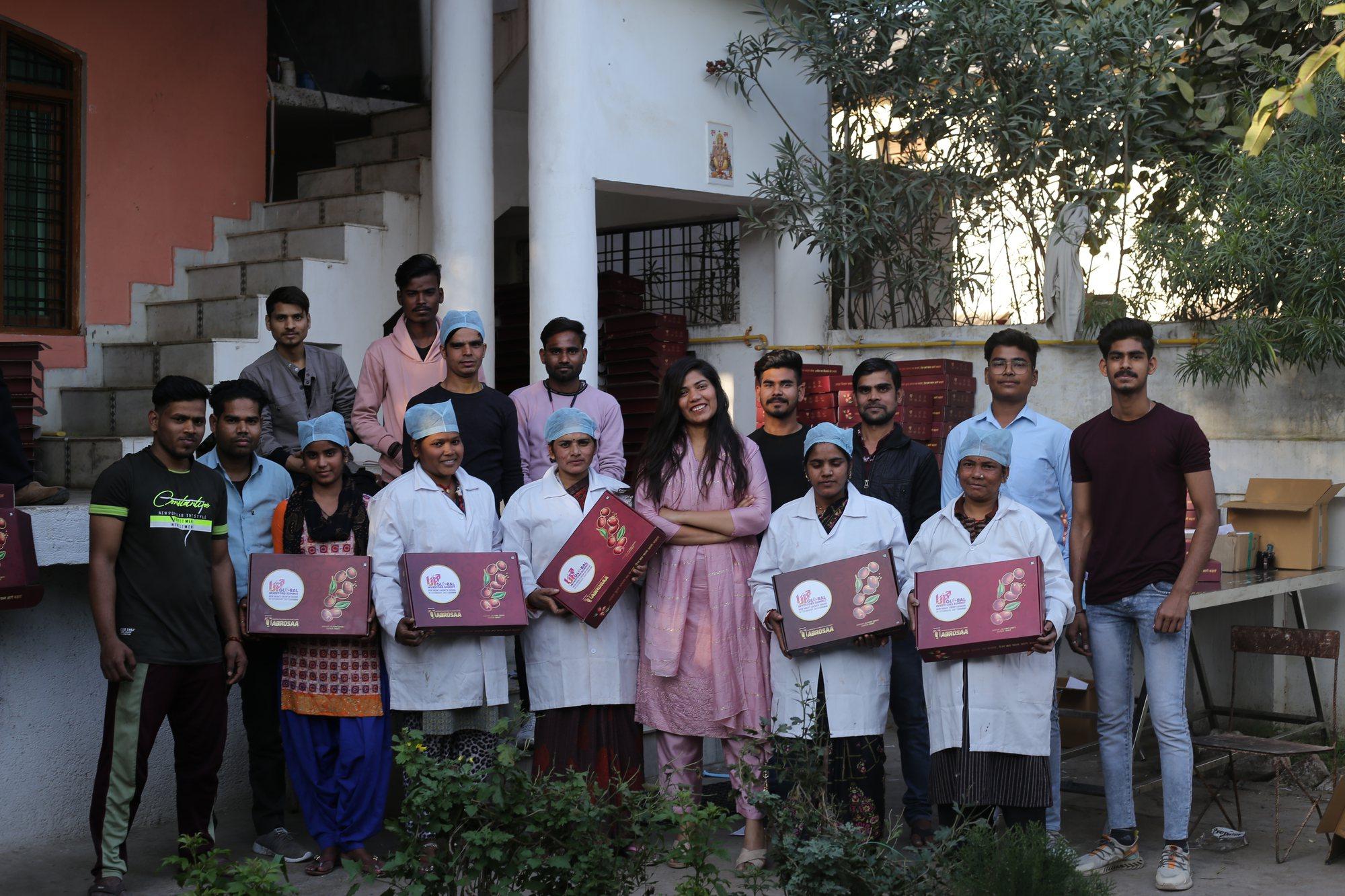
We hand people a piece and keep the camera running. Filmed at tasting stalls, from Slush in Helsinki to trade fairs at home.
Nobody shops for “spreads”. You shop for breakfast, or for the slump at four, or for a gift you forgot to buy.
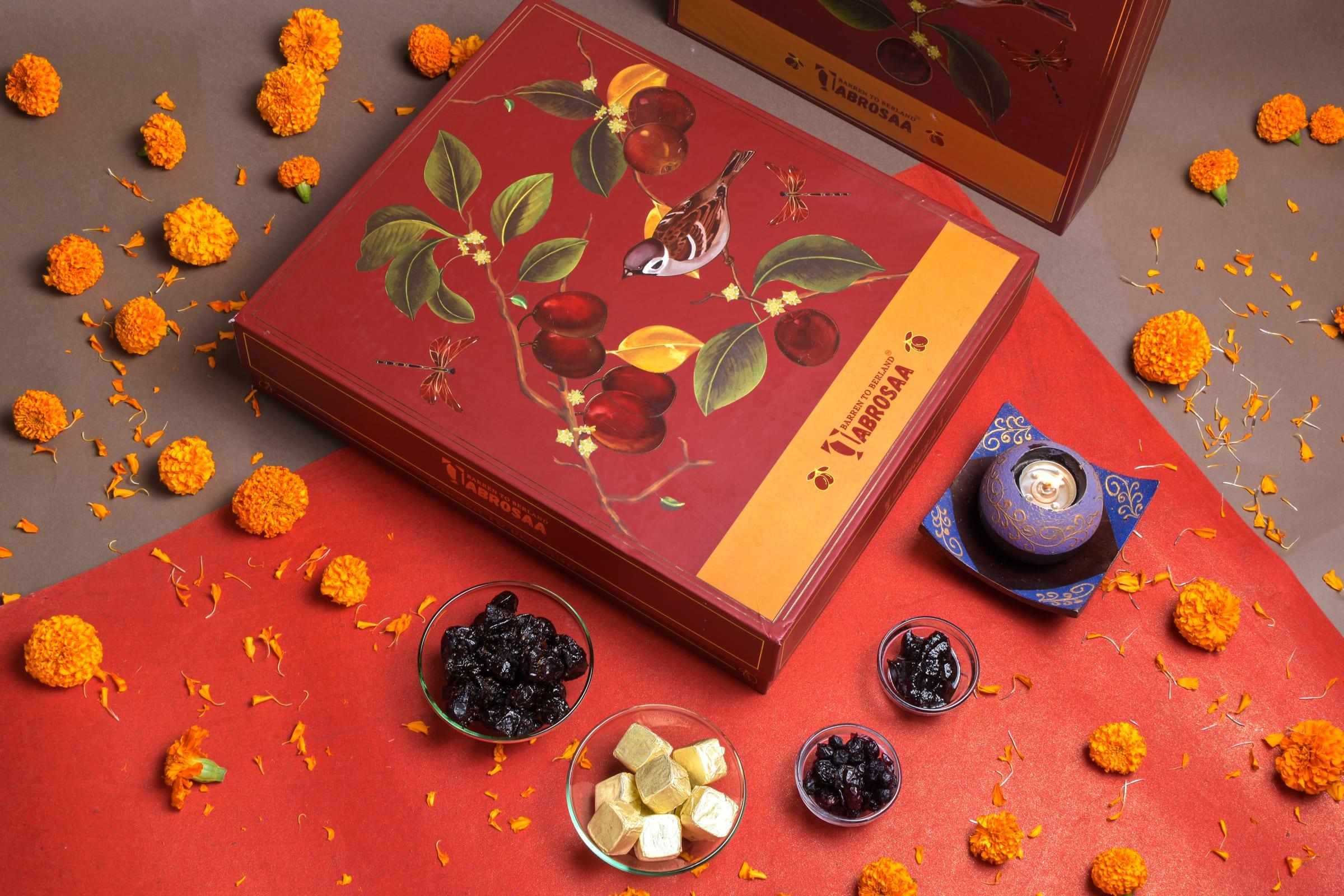
Illustrated boxes of ber chocolate, jam and more. For Diwali, for weddings, for the two hundred names on a client list.
Newspapers, channels and platforms that have covered Abrosaa’s work with ber.
 The Times of India
 Dainik Jagran
 Dainik Bhaskar
 Amar Ujala
 Jansandesh Times
 News24On Bundelkhand's women founders, December 2025Read the coverage
 CNBC Awaaz
 JioHotstarFeatured on Hausla Talks
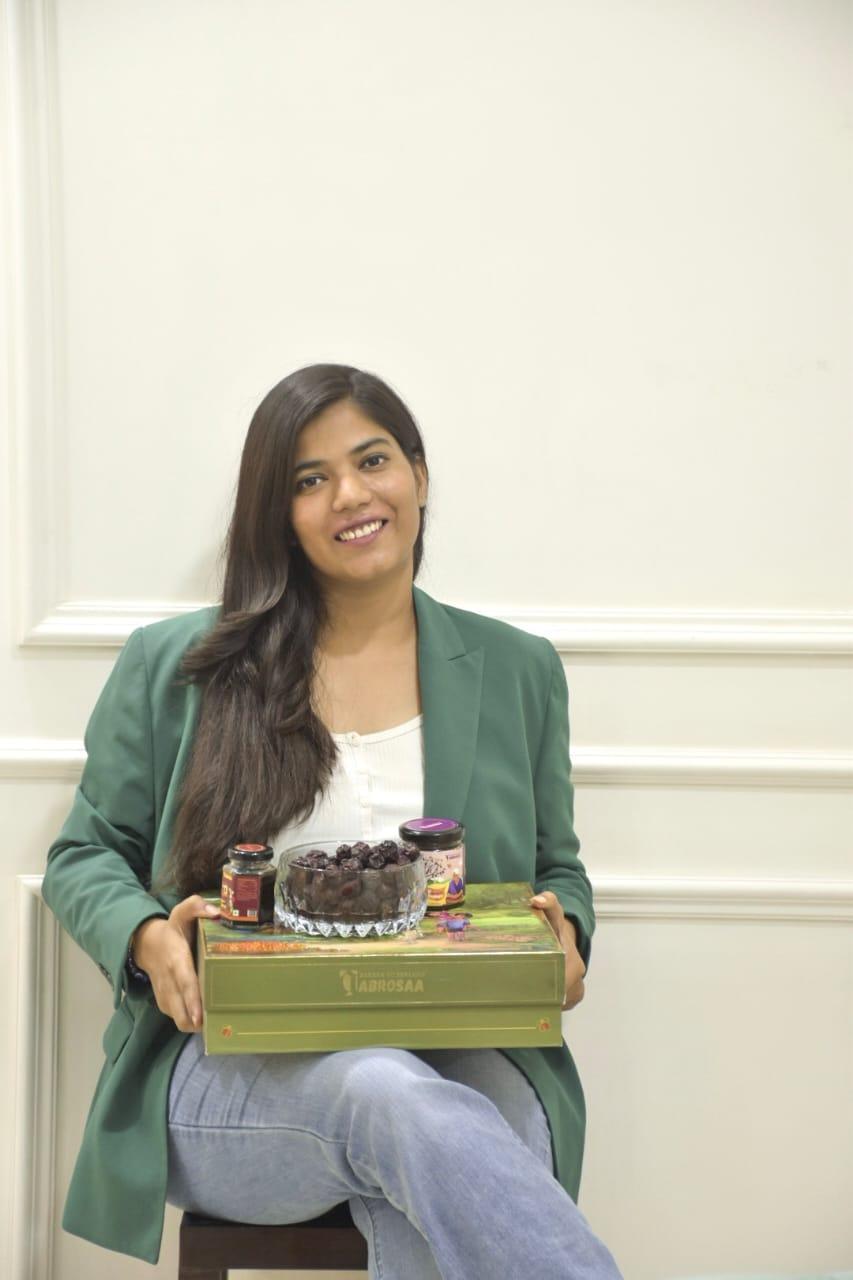
Shivani Bundela, Jhansi
Shivani Bundela worked on production lines at GSK, Puratos and Veetee before she returned to Jhansi. Her research, at Rani Lakshmi Bai Central Agricultural University, was on India’s own fruits. Ber came first.
Abrosaa is what she built around it: growers who sell us their harvest, a team in Jhansi that makes the products, and a shelf that keeps getting longer.


